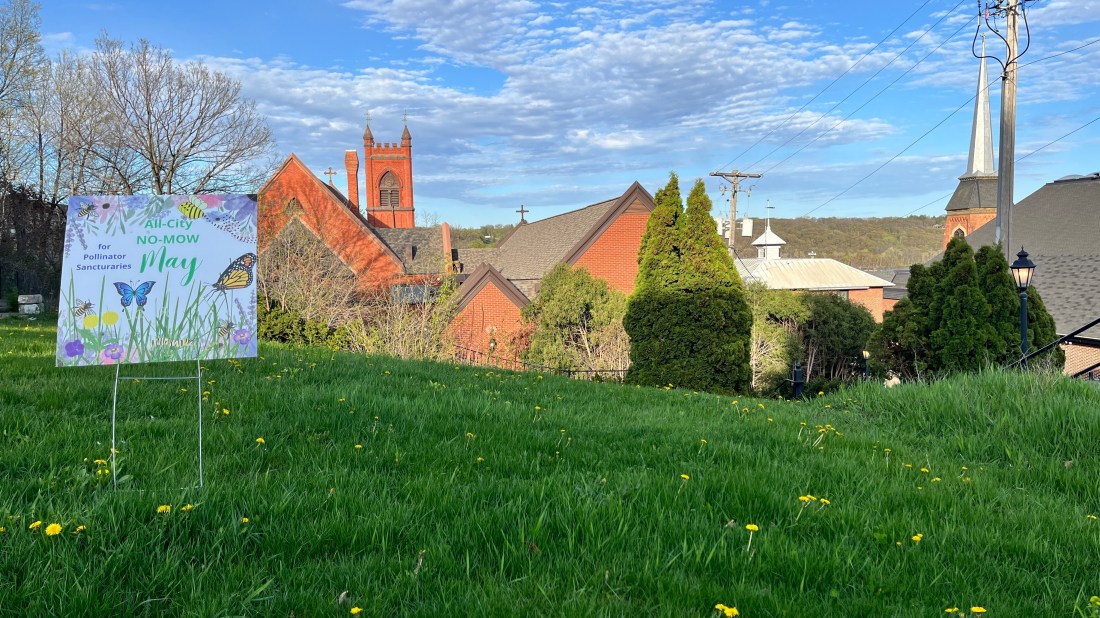
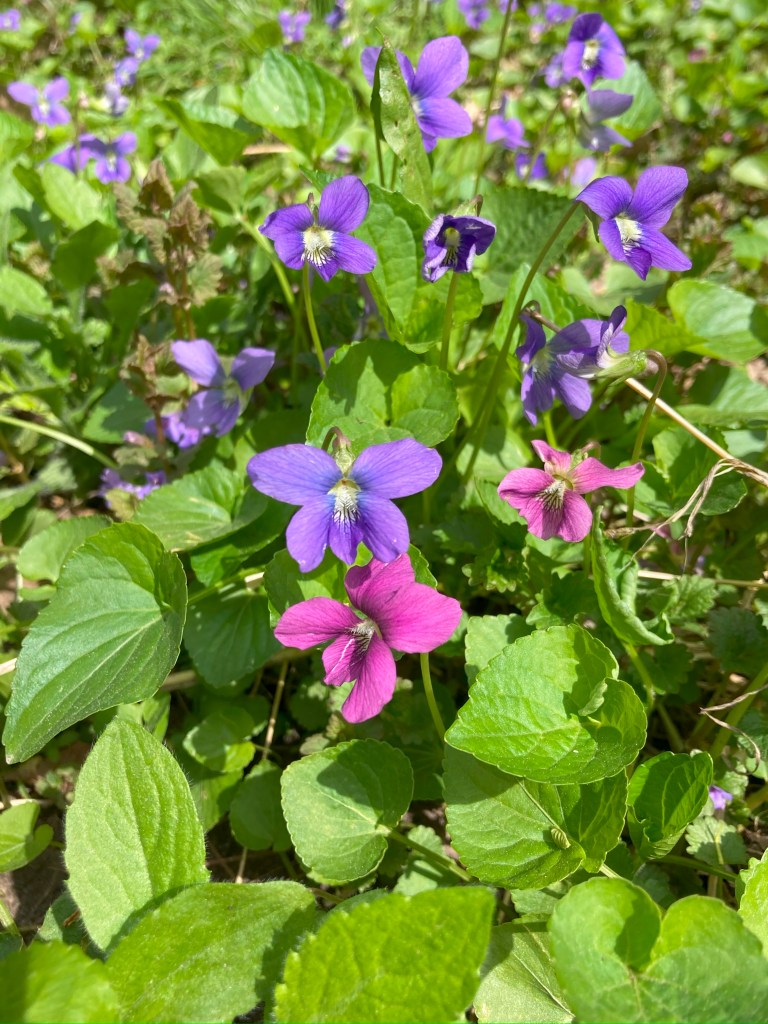
This month, many cities in our area are encouraging residents to let their lawns grow a little bit taller to cut down on noise pollution, fossil fuel emissions, and herbicide use, while also providing early season nectar for pollinators with violets, dandelions, pussytoes, and other low-growing lawn flowers. Participating in No Mow May is a great entry-level action that anyone can take to help protect the environment, and best of all, it is FREE!
According to statistics from the National Gardening Association and US Environmental Protection Agency, Americans buy 70 million pounds of fertilizer per year and use 125 million pounds of pesticides and herbicides for annual lawn care. Worst of all, the average American spends 384 hours of their life just…mowing…their…lawn. Lawn irrigation also places a strain on public water systems, forcing suburban communities in the Twin Cities to spend millions of dollars drilling new wells to meet peak water demand during the summer.

The thing is, most people don’t even care that much about having a perfect lawn. For most of us, we’re just trying to keep up with cultural norms and avoid being scorned by family and neighbors. No Mow May gives us permission to delay mowing in the spring and also helps us to move away from 1950’s-style high-input lawns and toward lower-maintenance, more natural yards that exist as part of our surrounding ecosystems.
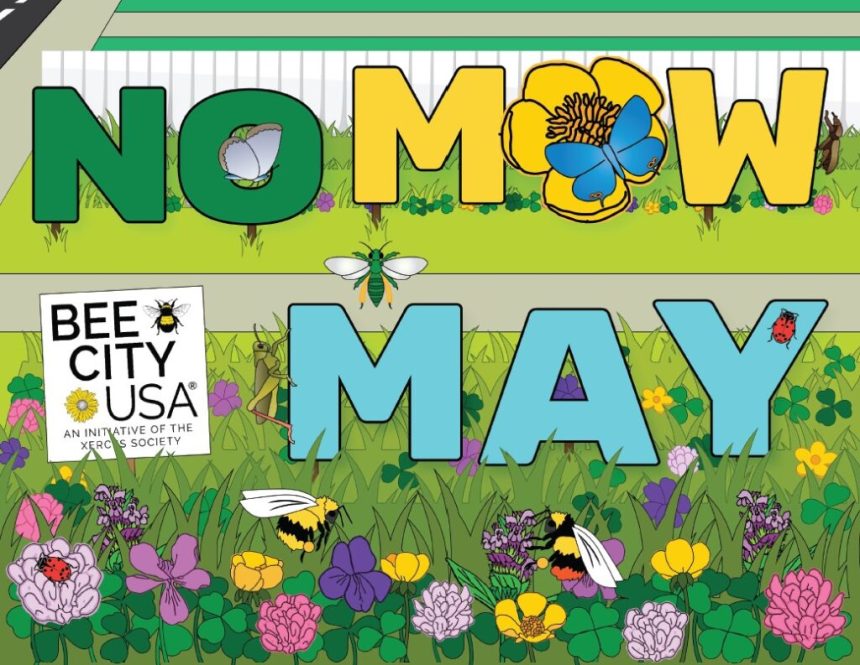
If you’d like to participate in No Mow May, you can download and print a yard sign at beecityusa.org/no-mow-may to let your neighbors know what you’re up to. Once the grass grows too tall to be manageable, It’s also ok to mow, even if it’s still May. When you do mow, set the mower blade as high as possible and gradually reduce the height each time to avoid shocking your lawn with an extreme haircut. As a general rule, leaving your lawn taller throughout the year (3-4 inches) will encourage deeper roots and better drought tolerance.
Many people who participate in No Mow May become inspired to take the next step and transition their conventional turf lawn into a low-mow or alternative lawn. We call that Slow Mow Summer. Drought tolerant turf-grass species like fine fescues reduce the need for mowing, watering, and chemicals, while low-growing flowers like Dutch white clover, self-heal, yarrow, creeping thyme, and pussy-toes can also be incorporated to provide food for native bees. The Blue Thumb – Planting for Clean Water website offers resources and instructions for introducing lawn alternatives into your landscape: bluethumb.org/turf-alternatives.
Lastly, as you think beyond the lawn, you can help to plant native flowers, trees, and shrubs in your yard and wider community to help to increase available habitat for birds and pollinators and to protect local waterways from runoff pollution. Find resources for gardening with native plants online at www.mnwcd.org/planting-for-clean-water and check-out an upcoming plant sale, including:
- Tue., May 13 (9am – 7pm): Anoka County Master Gardener Plant Sale at Anoka County Fairgrounds (3200 St Francis Blvd NW, Anoka)
- Sat., May 17
- (9am-2pm) Ramsey County Master Gardener Plant Sale at Aldrich Ice Arena (1850 White Bear Ave., Maplewood)
- (9am-1pm) Washington County Master Gardener Plant Sale + Garden Expo at Washington County Fairgrounds, Building A (12300 40th St N, Lake Elmo). Bring a wagon to hold purchases.
- Sat., June 7 (9am-1pm): Landscape Revival Native Plant Expo & Market (5825 Kelvin Ave N, Lake Elmo)
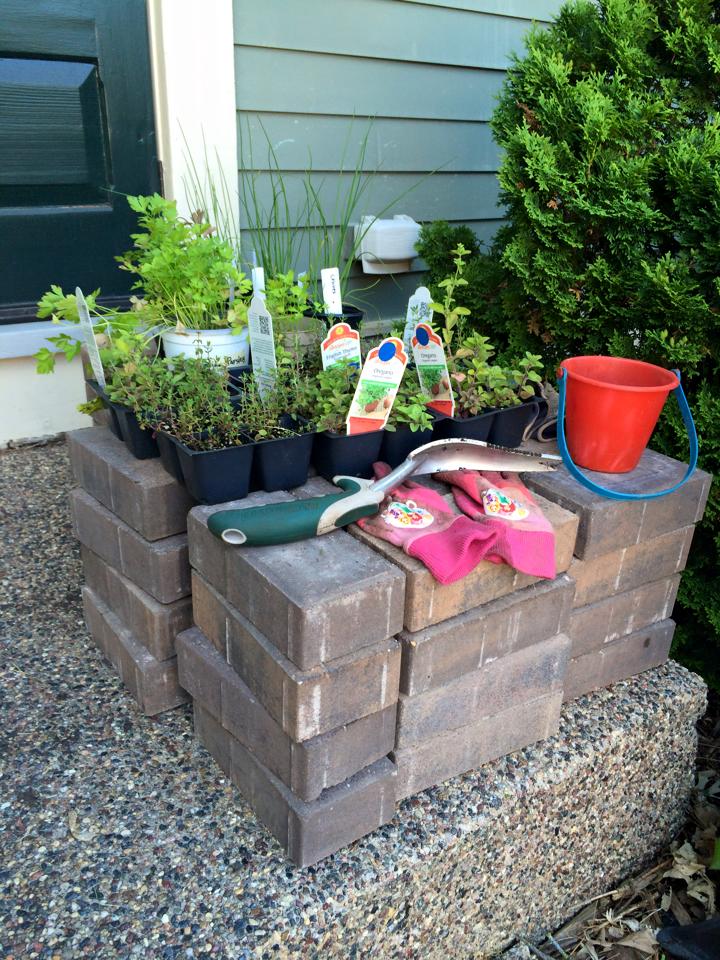
Looking for some opportunities to help spread the wildflower love in your community? Sign-up for one of these upcoming volunteer events:
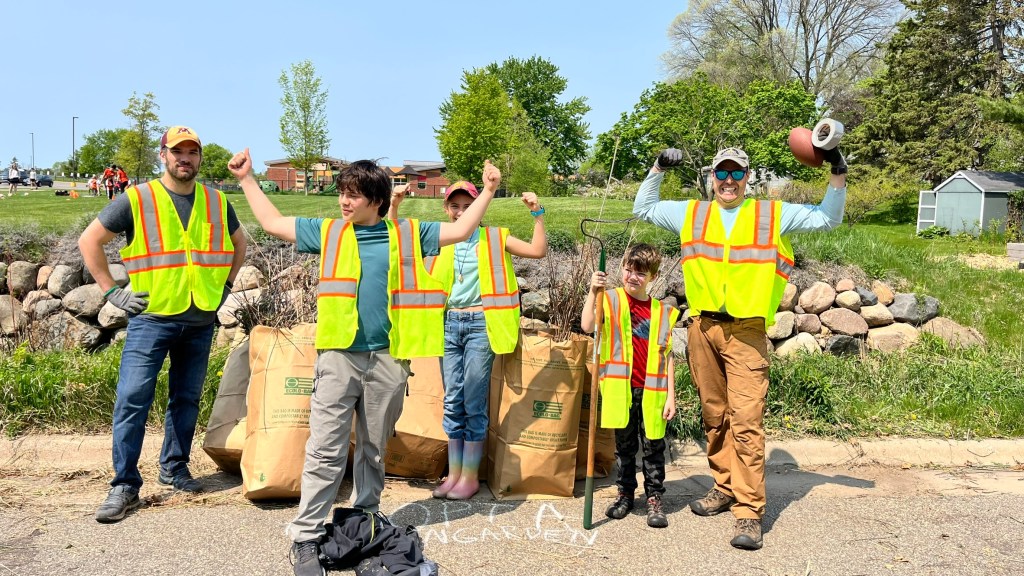
- Saturday, May 10 (10am-noon: Raingarden clean-up event in Stillwater. Volunteers will be clearing out litter, cutting back senesced vegetation, and pulling early spring weeds. Register here.
- Monday, May 12 (5:30-7:30pm): Raingarden Maintenance Workshop (Rosebrook Park in Roseville). This hands-on workshop, led by Metro Blooms land care experts, will cover practices for keeping your rain garden thriving and functioning. Get guidance for identifying native plants, managing weeds, timing for rain garden maintenance activities throughout the year, and more. Hosted by Rice Creek Watershed District. Register here. $15.
- Thursday, June 5 (5-7pm): Native planting on Forest Lake, with Great River Greening and Comfort Lake – Forest Lake Watershed District. Register here.
- Saturday, June 14 (9-11am): Native planting on Big Marine Lake, with Carnelian-Marine-St. Croix Watershed District and Washington Conservation District. Meet at the City of Scandia Lake Access (192 St. N. and Layton Ave. N.). Sign up at tinyurl.com/bigmarineplanting.

 East Metro Water